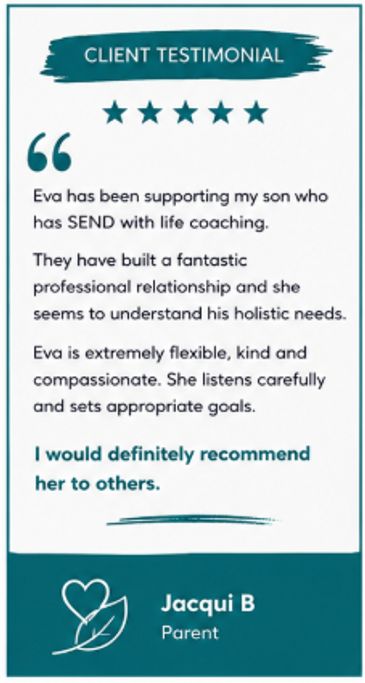
Eva Carroll provides personalised 1:1 online life coaching for teenagers aged 13 to 19 across the UK.
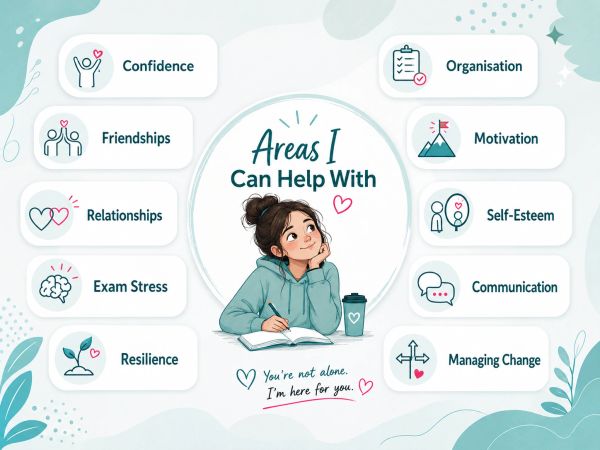
As a qualified teacher, former SENCO and EMCC Certified Coach with more than 28 years' experience working with young people, Eva supports teenagers with confidence, friendships, motivation, self esteem, school stress, independence and decision making.
Helping Young People Build Confidence, Resilience and Self-Belief
Teenage life can feel complicated. Pressures at school, changing friendships, uncertainty about the future and the desire to fit in can sometimes leave young people feeling overwhelmed, anxious or unsure of themselves.
I offer personalised online life coaching for teenagers aged 13–19, providing a calm and supportive space (online) where they can talk openly, understand themselves better and take practical steps towards positive change.
Every session is shaped around the individual young person, their personality, experiences, strengths and the areas of life they would most like to improve.


A teenager does not need to be in crisis to benefit from support, such as career guidance for teenagers or confidence building for teens. Some young people appear confident and capable on the outside while privately struggling with self-doubt, friendship difficulties, pressure, overthinking, or worries about getting things wrong. Others may feel stuck, unmotivated, or unable to explain what is troubling them. Teen life coaching can also provide essential tools to help them navigate these challenges.
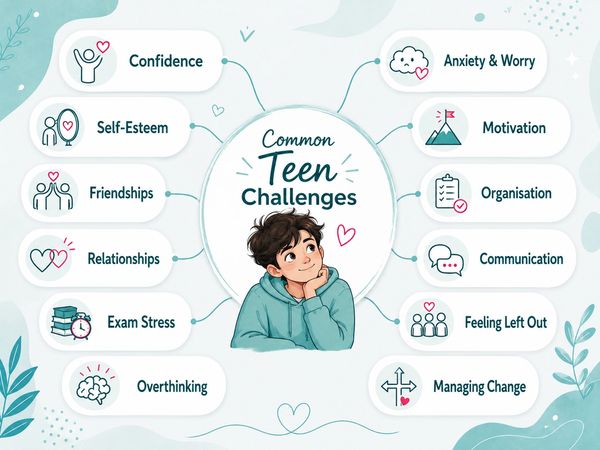
Many teenagers struggle with a lack of confidence or find it hard to recognise their own strengths. This can lead to negative comparisons with others and make it difficult to form friendships or relationships. They may worry about fitting in, being judged, or feeling left out, while also overthinking conversations, decisions, or past mistakes. They may find communicating their feelings may be a challenge. Schoolwork and exam pressure often overwhelm them, making career guidance for teenagers increasingly essential. Additionally, issues like organisation, motivation, and procrastination can be significant hurdles. After facing setbacks or disappointments, teens might lose confidence and find it challenging to manage change or uncertainty. As they navigate their journey, they may feel unsure of how to become more independent and often feel stuck, not knowing what needs to change. This is where confidence building for teens and teen life coaching can play a crucial role in helping them develop the skills they need to thrive.
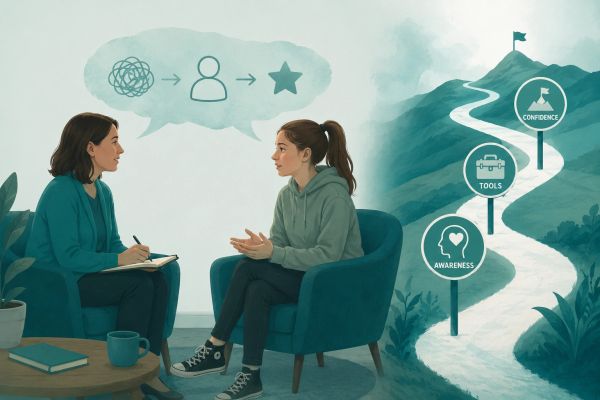
Teenagers do not always need somebody to tell them what to do. Often, they need a safe, supportive space where they can talk honestly, understand what is holding them back and begin finding their own way forward.
Through personalised one-to-one life coaching, I help teenagers explore their thoughts, feelings, strengths and goals without judgement or pressure. Together, we break overwhelming problems into smaller, more manageable steps and identify practical strategies they can use in everyday life.
Coaching does not promise to remove every difficulty. Instead, it helps a young person develop greater self-awareness, practical tools and confidence in their ability to respond differently.
.png/:/rs=w:600,cg:true,m)
Life coaching may help a teenager to:
.png/:/cr=t:0%25,l:0%25,w:100%25,h:100%25/rs=w:600,cg:true)
You may know that your teenager needs someone to talk to, while also recognising that advice from a parent can be difficult for them to accept. This is where teen life coaching comes into play, offering essential guidance for teenagers and opportunities for confidence building activities.
Please see Frequently Asked Questions below if you have any questions, or email me .
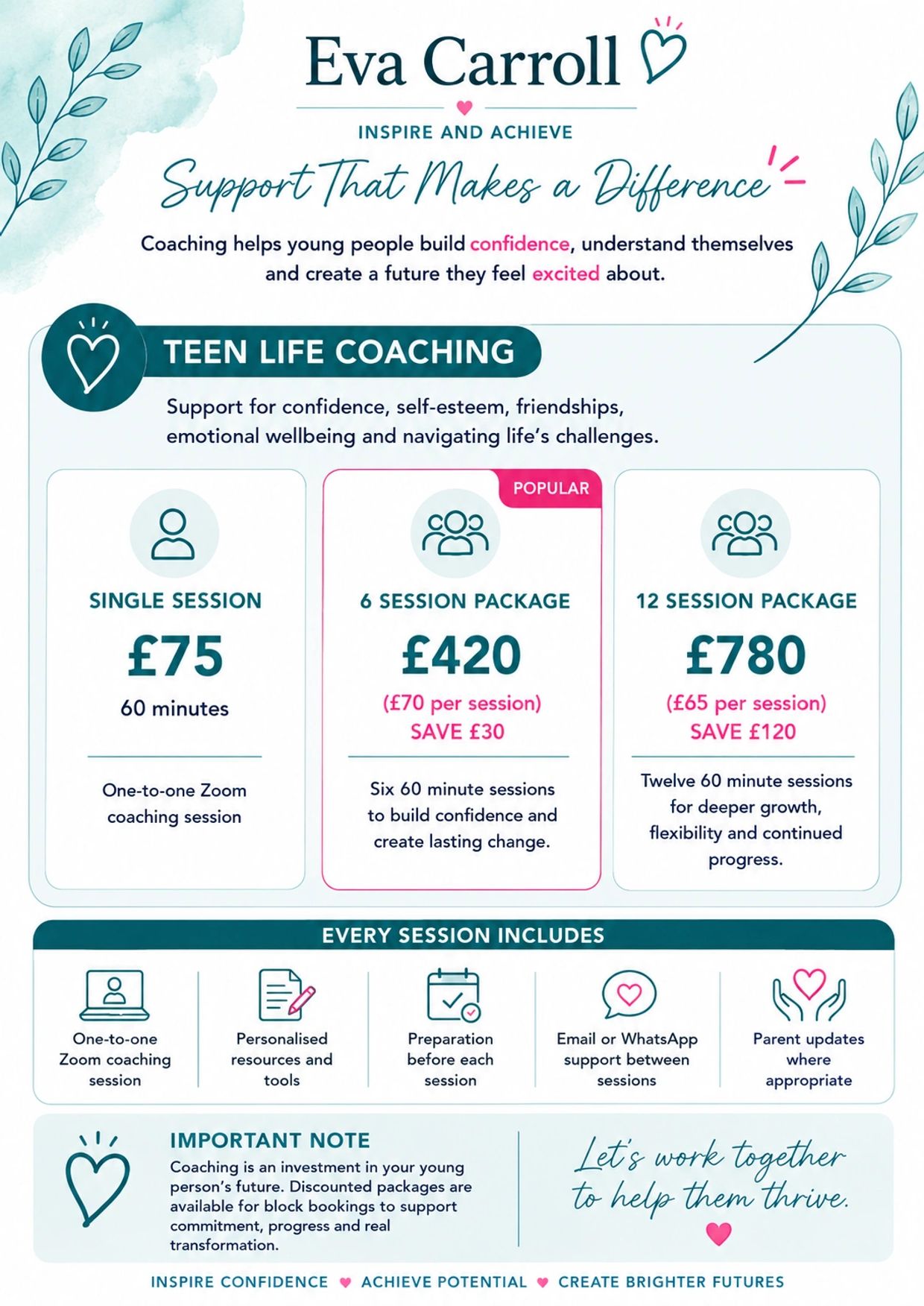
Book a free 30-minute consultation with me to learn more about my life coaching services and how I can help you achieve your goals.
Please reach me at evacarroll.inspireandachieve@gmail.com if you cannot find an answer to your question.
Life coaching for teenagers is personalised, forward-focused support that helps a young person understand themselves, identify what they want to change and take practical steps towards their goals.
Sessions may focus on confidence, motivation, friendships, communication, organisation, independence, decision-making or managing everyday pressures.
Unlike advice-giving, coaching encourages the teenager to think for themselves, recognise their strengths and take increasing ownership of their choices.
A life coach can provide a calm and non-judgemental space where your teenager can talk openly and work through the issues affecting their confidence or progress.
Coaching may help them:
The support is tailored to the individual teenager rather than following a one-size-fits-all programme.
Life coaching may help a teenager understand what has affected their confidence and begin noticing strengths, progress and positive qualities they currently overlook.
Rather than relying only on reassurance from adults, the young person is encouraged to collect evidence of what they can do, practise new behaviours and build confidence through achievable experiences.
Progress usually develops gradually through reflection, action and repeated small successes.
Yes, many teenagers feel comfortable talking online from their own home.
Online sessions can include discussion, visual activities, shared documents and written action plans. A private space, reliable internet connection and minimal interruptions will help the teenager engage fully.
A coach cannot create friendships for a teenager, but coaching can help them understand what may be getting in the way.
We might explore:
The aim is to help the teenager become more confident and intentional in how they connect with others.
Coaching can help a teenager reflect on friendship difficulties without immediately blaming themselves or somebody else.
They can explore communication, boundaries, misunderstandings, peer pressure, conflict and how to recognise respectful relationships.
They may also practise how to express concerns, respond assertively and decide when a friendship is no longer healthy.
Parents should look for relevant coaching training, safeguarding knowledge, appropriate insurance and substantial experience working with young people.
They should also be clear about the boundaries between coaching and mental-health treatment.
My own approach draws on professional coach training and more than 25 years of experience working with teenagers in education, including careers, PSHE and special educational needs.
Life coaching can help a teenager notice when they are caught in repeated thinking and distinguish between useful reflection and unproductive overthinking.
They may learn to:
Where overthinking is driven by significant anxiety or intrusive thoughts, therapeutic or medical support may also be needed.
Life coaching may help with everyday school stress by supporting a teenager to organise tasks, manage time, set priorities and develop realistic routines.
We can also explore perfectionism, fear of failure, procrastination and the pressure they place on themselves.
However, severe exam anxiety, panic attacks, self-harm or significant deterioration in mental health require appropriate professional support. Exam periods can sometimes intensify serious mental-health difficulties.
Yes, although it is important first to understand what appears to be “lack of motivation.”
A teenager may be avoiding something because it feels overwhelming, irrelevant, difficult or likely to end in failure. They may also be exhausted, anxious or unsure where to begin.
Coaching can help them identify what matters to them, break tasks into smaller steps, create realistic routines and develop accountability.
It is more effective to build meaningful motivation than simply tell a teenager to try harder.
Yes. Coaching can help a teenager understand what triggers their procrastination and find strategies that fit them personally.
These may include:
Procrastination is often connected with overwhelm, low confidence, perfectionism or executive-function difficulties rather than laziness.
Life coaching can offer practical support with planning, organisation, motivation, prioritising and completing tasks.
Sessions may include:
Life coaching does not diagnose or treat ADHD and should not replace medical or psychological care.
Yes. Sessions can focus on practical systems for schoolwork, appointments, routines and responsibilities.
The teenager may experiment with planners, phone reminders, checklists, visual schedules or breaking larger tasks into stages. The aim is to find a system they can realistically maintain rather than impose an elaborate system chosen by an adult.
Life coaching may be suitable for mild, everyday worries where the teenager is able to take part in practical, forward-focused work.
It can help them identify triggers, prepare for situations, organise their thoughts and build confidence through manageable action.
Life coaching is not treatment for an anxiety disorder. Where anxiety is persistent, worsening or interfering substantially with school, relationships, sleep or daily life, families should seek support through a GP, school or qualified mental-health professional.
The first step is to complete a short enquiry form or arrange a free initial conversation.
This allows us to discuss what your teenager is finding difficult, what they hope to change and whether life coaching appears to be an appropriate form of support.
There is no obligation to book a package following the initial conversation.
Link to book: https://scheduler.zoom.us/eva-carroll-inspire-and-acheive/free-30-minute-coaching-consultation
Life coaching is generally focused on the present and future. It helps a teenager identify goals, develop practical strategies and take action.
Counselling or therapy may explore emotional distress, mental-health conditions, trauma or past experiences in greater depth and is delivered by appropriately trained mental-health professionals.
Some young people may benefit from both, provided the roles are clear and the professionals involved consider this appropriate.
Life coaching is not a treatment for depression.
A young person experiencing persistent low mood, hopelessness, withdrawal, major changes in sleep or eating, self-harm or suicidal thoughts should receive support from a GP or appropriate mental-health service.
Coaching may sometimes be considered later or alongside clinical support for practical goals, but only where it is safe, appropriate and clearly distinguished from treatment.
Yes. Some teenagers know that something feels wrong but struggle to find the words to explain it.
Coaching can help them expand their emotional vocabulary, identify what they need, prepare for difficult conversations and practise communicating respectfully and assertively.
They are not forced to discuss anything they do not wish to share, and sessions proceed at a pace that feels manageable.
Life coaching is primarily for the young person, but it may indirectly improve family communication.
As the teenager becomes clearer about their feelings, needs and boundaries, they may be better able to explain themselves. Coaching can also help them consider another person’s perspective and plan calmer ways of raising difficult subjects.
It is not family therapy, and deeply entrenched family conflict may require specialist support.
Yes. Change can make teenagers feel that they have lost control, particularly during transitions involving school, friendships, exams, family circumstances or future plans.
Coaching can help them distinguish what they can and cannot control, recognise previous coping strengths, prepare for practical challenges and create a manageable plan for the transition.
Yes. Coaching can support teenagers to take greater ownership of decisions, routines and responsibilities.
Depending on their age, this might involve managing schoolwork, travelling independently, speaking to teachers, organising appointments, solving problems or making thoughtful decisions.
The goal is not to remove parental support suddenly, but to help the young person gradually build competence and confidence.
Sessions usually involve a relaxed conversation focused on what the teenager wants help with.
We may:
The teenager is not lectured, tested or told what they must do.
A teenager needs an appropriate level of privacy to speak honestly and develop trust.
I would not routinely repeat the details of a session to parents. We would agree in advance what general progress or actions may be shared.
Confidentiality has limits where there is a safeguarding concern or a serious risk of harm, and these limits should be explained clearly before coaching begins.
A parent may join part of the initial conversation to explain their concerns and help agree the purpose of the coaching.
The main coaching conversation will usually work best with the teenager alone, allowing them to speak freely and take ownership of the process.
The exact arrangement can be adapted according to the teenager’s age, needs and confidence.
It is common for the first enquiry to come from a parent.
I would explain coaching in a straightforward, non-pressured way and allow the teenager to ask questions. However, coaching cannot be imposed successfully. The young person needs at least some willingness to participate and consider change.
An introductory conversation can help establish whether coaching feels right for them.
This depends on the issue, the teenager’s goals and how much support they would find useful.
A specific concern may improve through a short block of sessions. Broader difficulties involving confidence, motivation, communication or independence may need longer.
Progress and goals should be reviewed regularly rather than automatically continuing coaching indefinitely.

Our supportive coaching is tailored to the individual, emphasizing career guidance for teenagers. This approach encourages young people to grow in confidence and direction. Through flexible and supportive teen life coaching, we focus on confidence building for teens, fostering independence and essential life skills over time.

As an experienced teacher and EMCC qualified life and career coach, I provide structured, high-quality support in career guidance for teenagers. My focus on confidence building for teens is delivered with care, clarity, and integrity. Grounded in education, my proven approach ensures effective teen life coaching, coupled with genuine care for young people.
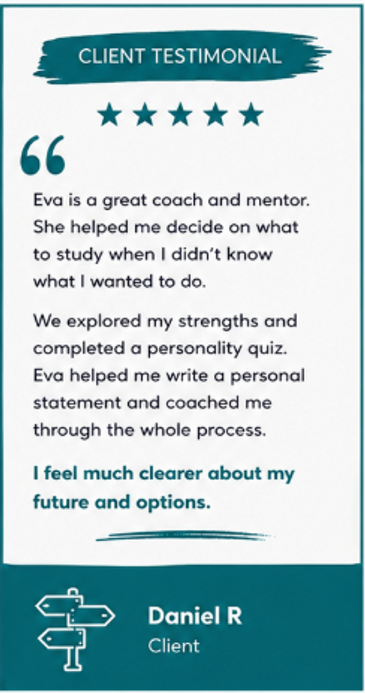
Supporting young people through career guidance for teenagers enables them to explore various options and build confidence through effective confidence building for teens. This approach helps them move forward with purpose and determination. Transitioning from uncertainty to actionable next steps—be it in education, training, work, or alt
Supporting young people through career guidance for teenagers enables them to explore various options and build confidence through effective confidence building for teens. This approach helps them move forward with purpose and determination. Transitioning from uncertainty to actionable next steps—be it in education, training, work, or alternative pathways—teen life coaching provides essential support as they navigate their futures.
Sussex/Surrey, England, United Kingdom
Click the button and book a free 30 minute consultation to see if coaching is a good fit for your teenager.